Jun 26, 2026News & Insights
Thermal Paper 2026: Surviving the Paperless Onslaught – How Logistics & Eco-Regs Are Reshaping the Roll
Published: May 11, 2026 Category: Consumables & Compliance Market at a Glance: Steady But Split The global thermal paper market is a tale of two cities. While the POS receipt segment faces rele
Published: May 11, 2026
Category: Consumables & Compliance
Market at a Glance: Steady But Split
The global thermal paper market is a tale of two cities. While the POS receipt segment faces relentless pressure from digital payments and e-receipts, the logistics and labeling sector is booming. The market is projected to grow at a modest CAGR of 3.9%, reaching $6.52 billion by 2035, but this headline masks a dramatic product shift. The real story is the mandatory pivot to BPA-free and phenol-free chemistries, driven by stringent new global standards that are rendering old stock obsolete .
For resellers and merchants, this means the humble receipt roll is no longer a simple commodity. It is now a regulated consumable where compliance and application specificity trump price.
Trend 1: The Regulatory Hammer – BPA is Dead, “Phenol-Free” is the New Baseline
The single biggest driver of change in 2026 is regulatory compliance. The era of standard BPA-coated paper is over in most developed markets.
- EU & China Lead the Charge: The EU’s REACH regulation (BPA ≤ 0.02%) has been in force, and China’s GB/T 28210-2024 standard, which took effect in April 2025, sets strict limits (≤200 mg/kg for general use, "non-detectable" for certain specialty papers). Non-compliant paper is becoming unsellable in these major markets .
- Health-Conscious Demand: Beyond legality, consumer awareness is pushing retailers to adopt safer alternatives. Major chains are voluntarily switching to phenol-free papers to meet sustainability goals and customer expectations .
Reseller Impact: Stocking non-compliant thermal paper is a major liability risk. Your inventory must be clearly labeled as BPA-Free or Phenol-Free to remain marketable.
Trend 2: Application Divergence – POS Shrinks, Logistics Explodes
The “paperless office” is finally hitting the checkout counter, but creating new demand elsewhere.
Segment | Status | Driver |
|---|---|---|
POS Receipts | Declining | Digital receipts (e-receipts), QR code payments, and e-invoicing are reducing foot-long paper trails. This segment is in structural decline in mature markets . |
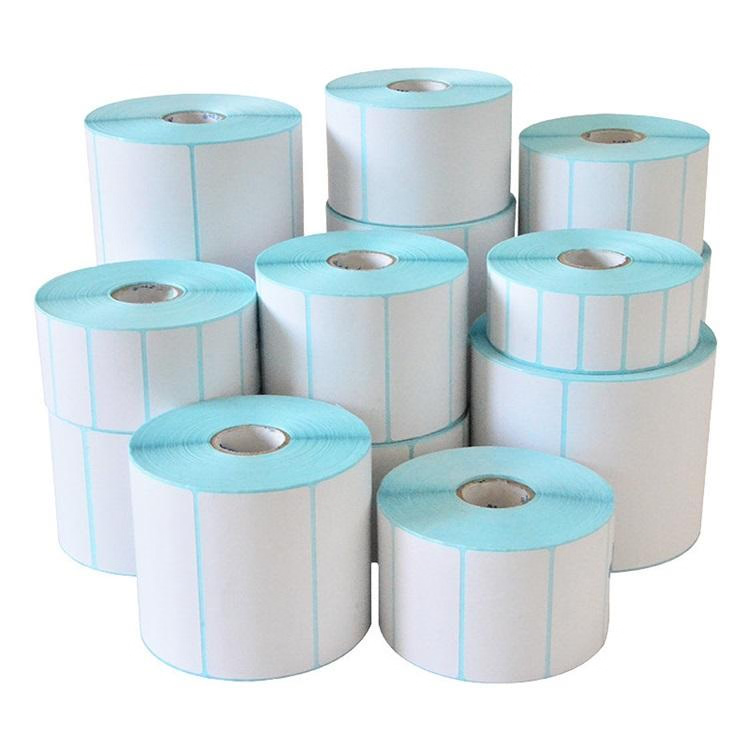
Logistics & Labels | Booming | The e-commerce explosion and demand for on-demand shipping labels, RFID-integrated tags, and warehouse barcode systems are the primary growth engine. This segment requires more durable, high-performance paper . |
Trend 3: Performance Upgrades – It’s Not Just Paper Anymore
To justify their place in a digital world, thermal papers are getting smarter and tougher.
- Durability for Logistics: Standard receipt paper fades. New demand is for “long-life” thermal papers with better resistance to heat, light, and moisture for archival purposes (e.g., medical records, shipping documents) .
- Synthetic & Specialty Substrates: For harsh environments (freezers, outdoor logistics), synthetic thermal paper and film-based substrates are gaining share over traditional wood-pulp paper .
Reseller Strategy: Pivot to Compliant & Specialized Stock
Action Item | Rationale |
|---|---|
Audit & Purge Old Stock | Immediately phase out any thermal paper that is not explicitly certified as BPA-Free. Selling non-compliant rolls in regulated regions opens you up to legal risk. |
Segment Your Catalog | Don’t just sell “thermal paper.” Create clear SKUs for: 1) Retail POS (BPA-Free), 2) Logistics Labels (Durable), 3) Medical/Archival (Long-Life). |
Bundle with Hardware | When selling a thermal printer, bundle it with the correct type of compliant paper. This adds value and ensures the customer’s first experience isn’t ruined by low-quality, fading paper. |
Bottom Line: The thermal paper market is splitting. Success lies in moving away from generic, low-margin receipt rolls and towards high-value, compliant, and application-specific paper solutions for logistics and specialty retail.